Hospital
Parent Chair
A compact chair-bed designed around the parent’s continuous presence beside a hospitalised child.
This master’s project rethought a familiar piece of hospital furniture around the parent as a continuous user of the room. The final system combines sitting, relaxation, sleep and personal storage in one compact object designed to remain close to the child.
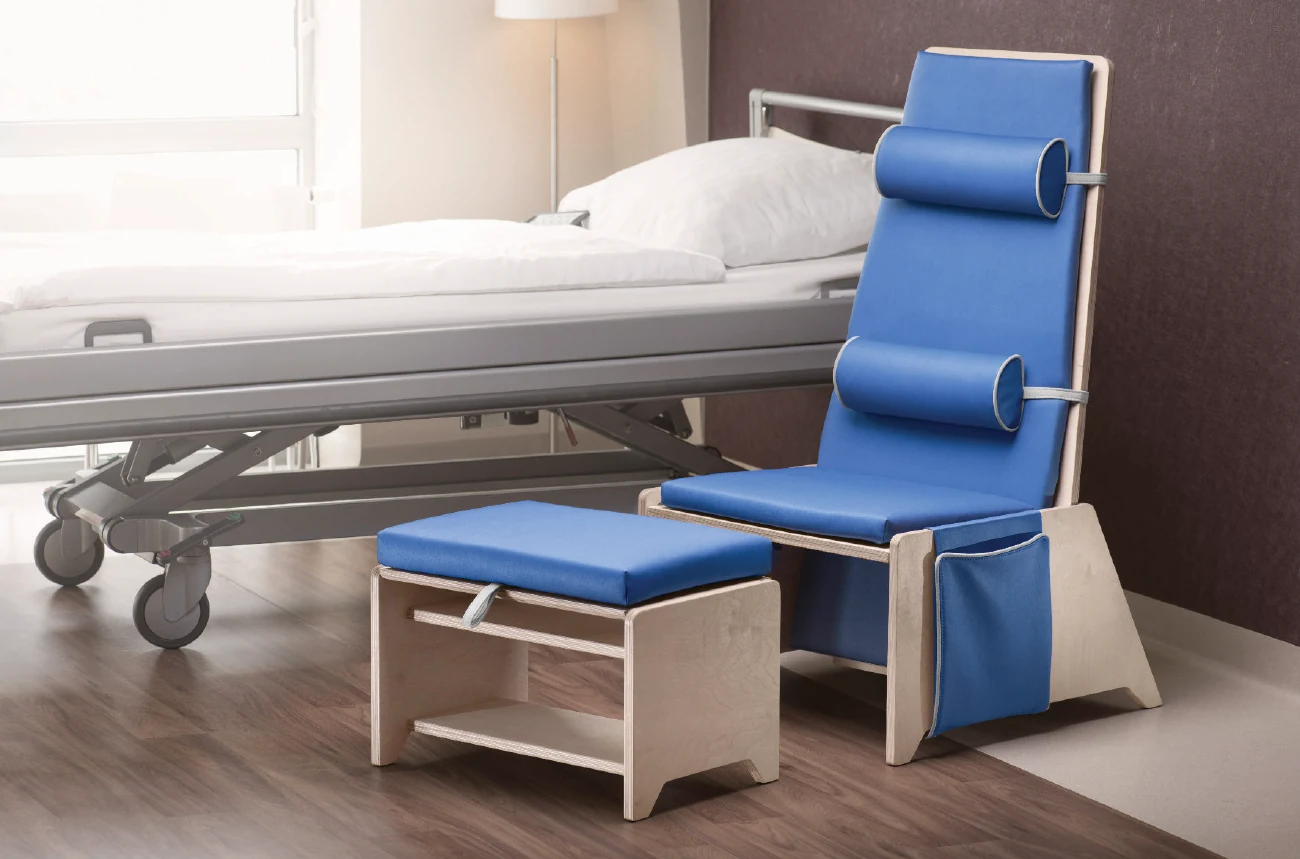
Staying close should not mean sleeping on the floor.
During a child’s hospital stay, the parent needs more than a visitor chair. The project treated the parent as a continuous user of the room — someone who needs to sit, relax, keep personal belongings close and eventually sleep beside the child.
The design therefore focused on turning several everyday needs into one compact system rather than adding more separate furniture to an already constrained environment.
Designed from the ward, not from assumptions.
The project began with the everyday realities of hospitalisation: the parent’s long presence beside the child, the limitations of existing furniture and the practical demands of a clinical room.
The design process translated those observations into a clear brief: support several modes of rest, keep belongings within reach, make every moving element understandable and use materials that can cope with hospital maintenance.
Stay close
The object had to work beside the hospital bed rather than pull the parent away from the child.
Change state
Sitting, relaxation and lying needed to be supported by one coherent system.
Keep essentials nearby
A lower shelf and side pocket provide dedicated places for the parent’s personal belongings.
Make use legible
Moving elements are distinguished visually so the product can explain its own interaction.
A small footprint with the logic of a temporary room.
The brief became less about designing a “comfortable chair” and more about supporting an entire cycle of use beside the child. Every feature had to earn its place in a crowded ward.
Stay beside the bed.
Work in an existing hospital room without reorganising the space.
Support three positions.
Sitting, relaxation and lying within one compact system.
Make movement readable.
Use clear visual cues so the parts intended to move can be recognised at a glance.
Improve the parent’s comfort without obstructing care, while keeping storage, cleaning and daily ward routines in view.
Sit. Rest. Sleep. Stay close.
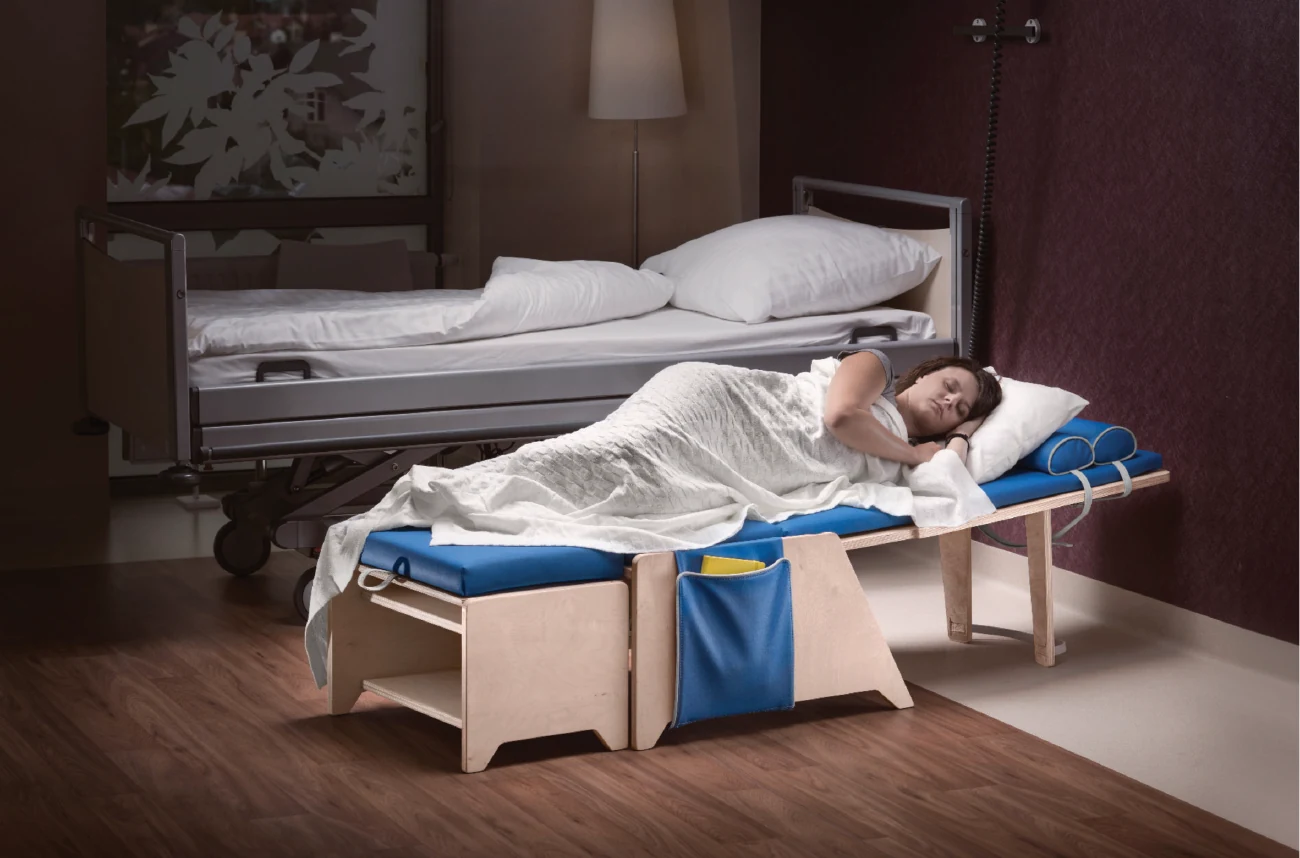
The system consists of two parts: the chair and a pull-out unit that works as both a small table and a footrest. When the two parts are joined and the back support is extended, the chair becomes a bed.
This makes the object useful through the whole day: compact for sitting, more relaxed for waiting and extended when the parent needs to lie down.
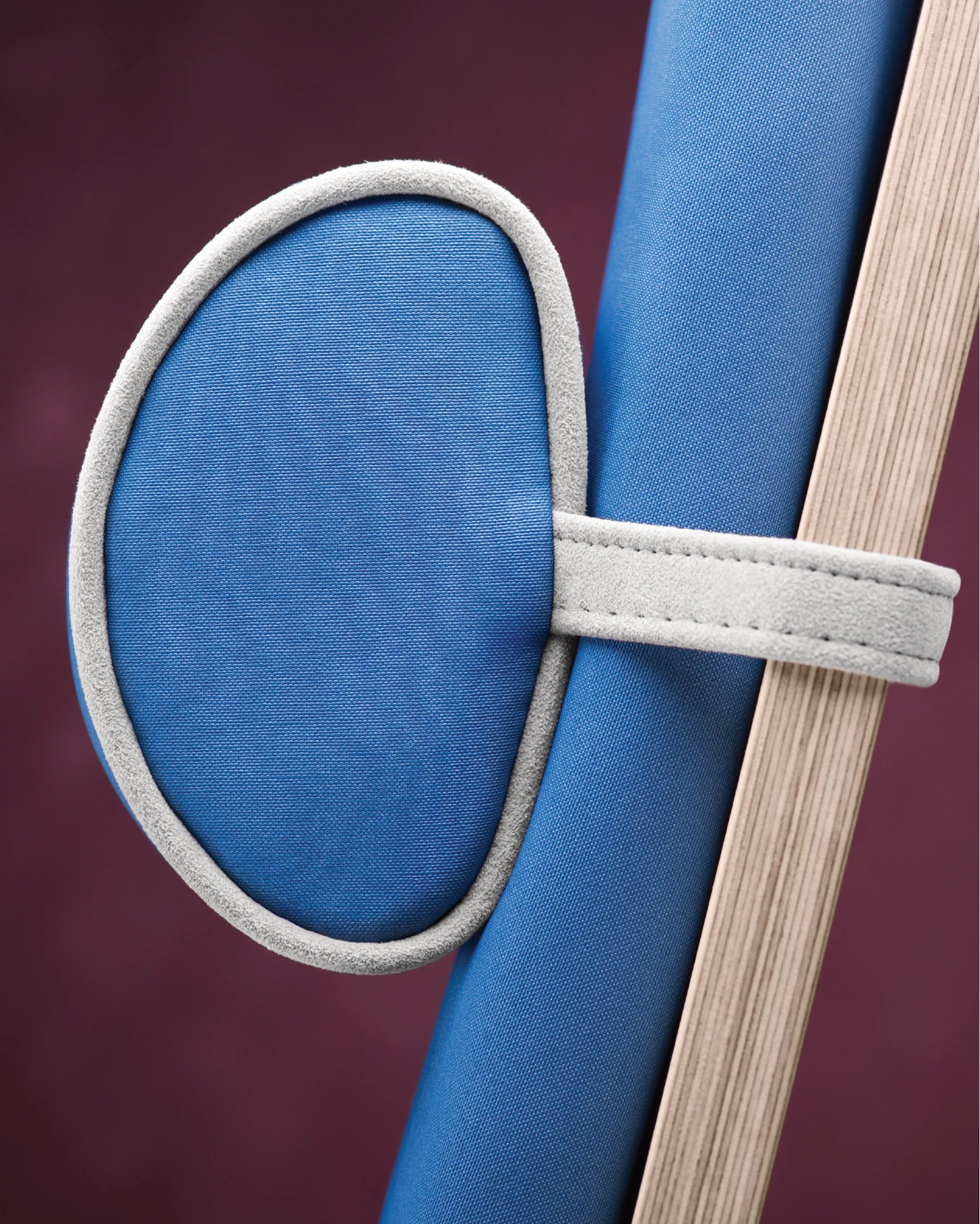
Details explain what can move.
In a stressful environment the object should not need instructions. A small set of visible cues explains how the system can be adjusted and what each element is for.
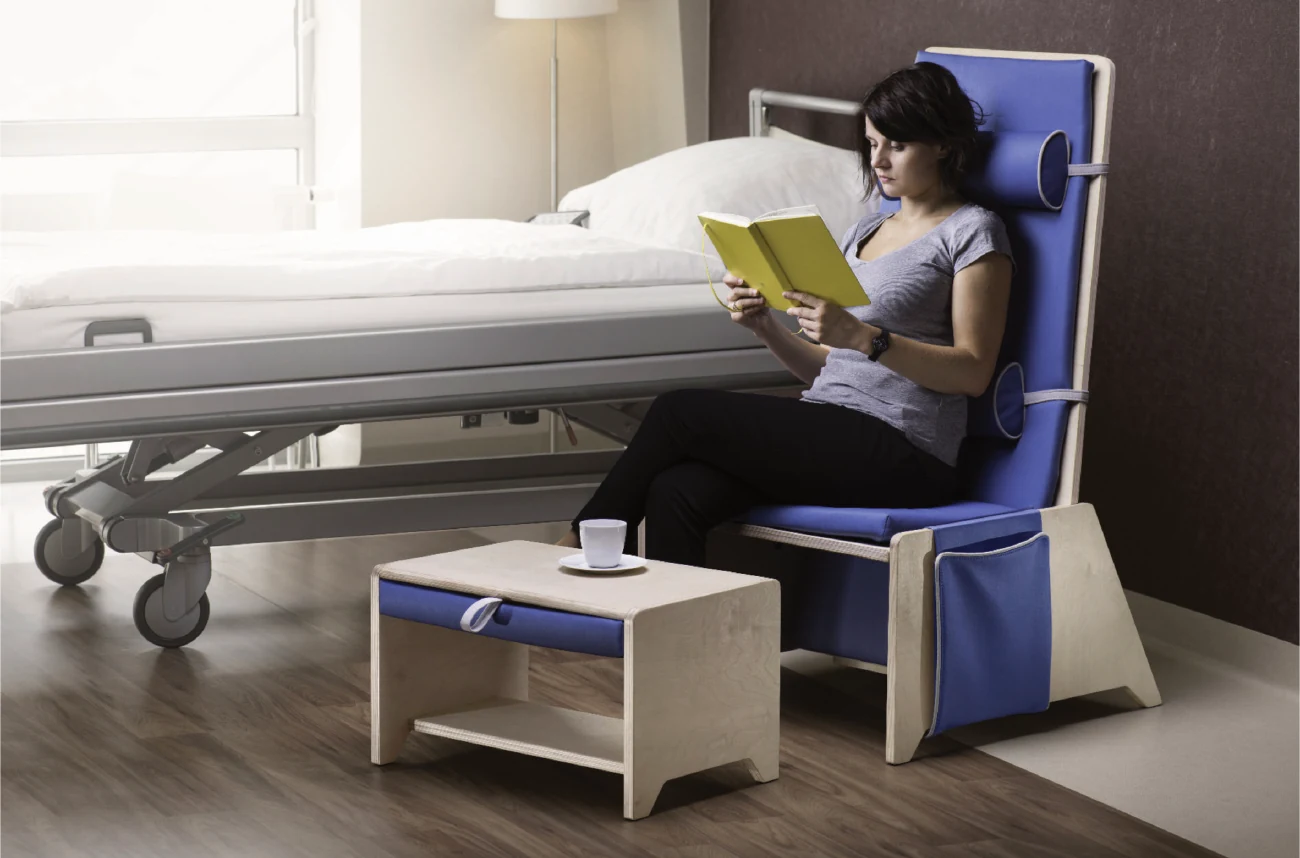
Less clinical in feeling. Still designed for hospital realities.
The structure was made from plywood and protected with a clear antibacterial finish. This gave the object a warmer, more domestic character while keeping the construction visually straightforward.
The upholstered elements used Silvertex fabric specified for demanding hospital conditions and were designed to be removable for easier cleaning. Colour contrast was used deliberately to distinguish the parts that move.
Built full scale and photographed in context.
A full-scale working prototype was produced and photographed in a hospital-room context. Showing the object beside the bed makes its scale, footprint and relationship to the care environment immediately understandable.
Photography: Przemek Szuba.
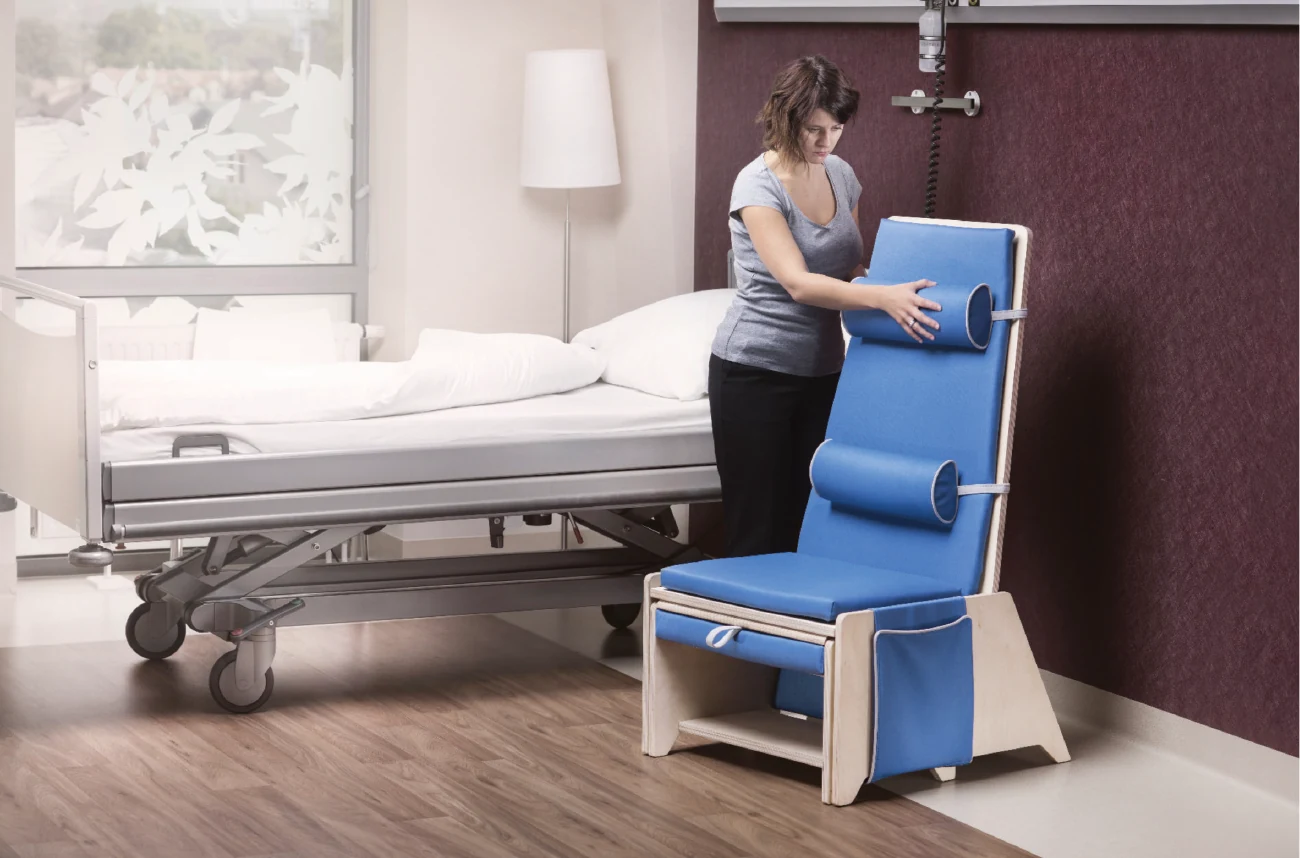
Comfort without rebuilding the room.
The final concept brings sitting, relaxation, storage and lying into one compact system. The chair, pull-out table / footrest, lower shelf, side pocket and removable upholstered elements were designed as one coordinated response to the parent’s everyday presence beside the child.
Research and synthesis, concept development, ergonomics, industrial design, material and interaction decisions, prototype development and final presentation.